- Press Office
- Blogs and More
- Expedition into darkness – our blog from Spitsbergen
Expedition into darkness – our blog from Spitsbergen
While northern Germany was threatened with being buried in snow chaos in mid-January, researchers from the Max Planck Institute for Marine Microbiology set off for even more wintry climes: Spitsbergen. This archipelago, which belongs to Norway, lies far up in the Arctic Ocean, where winter is particularly dark, cold and impressive.
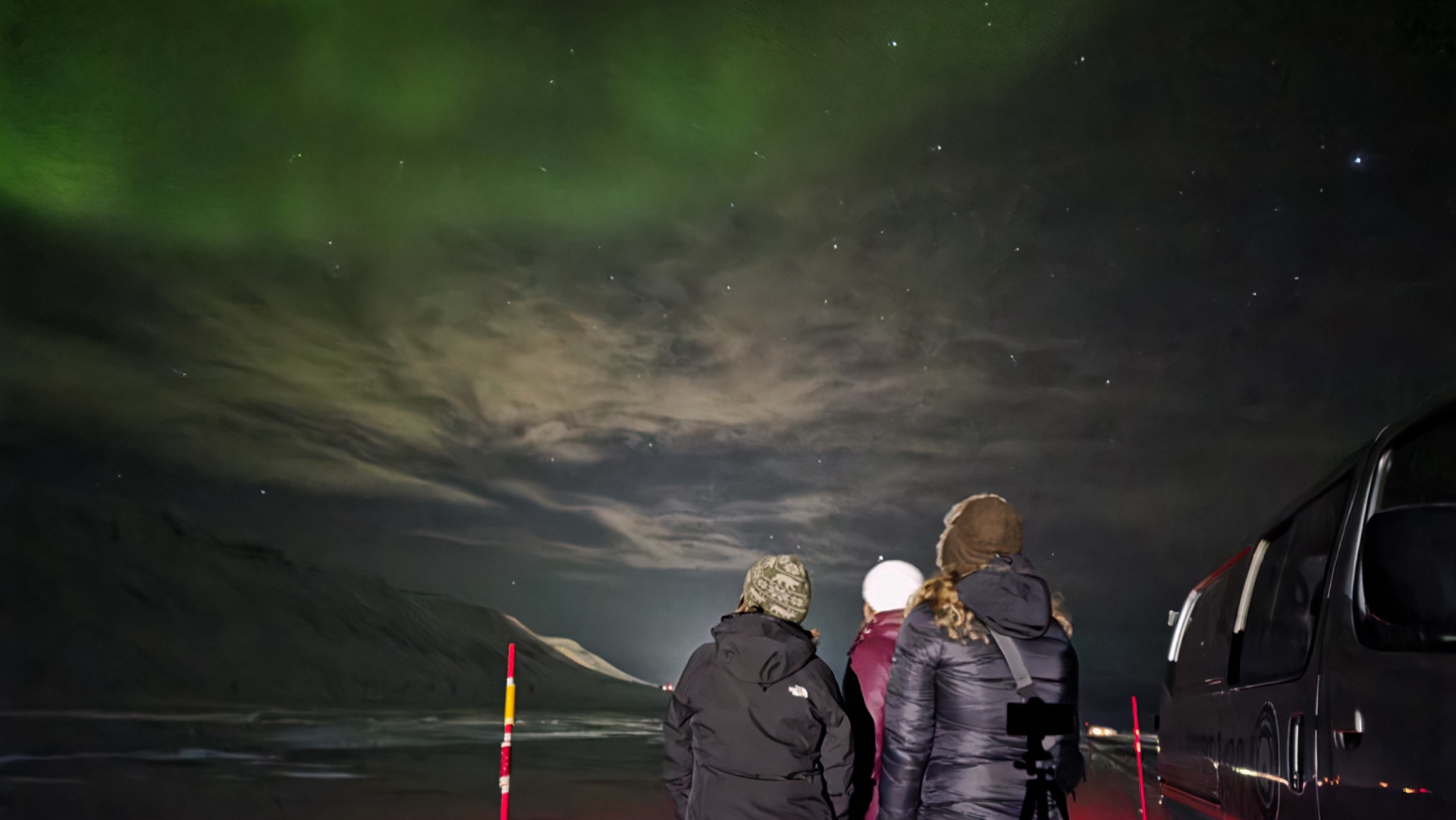
The team led by project leader Katrin Knittel, which has now ventured to the far north, is particularly interested in the life of bacteria in sandy coastal sediments and their close connection to the overlying water. From previous expeditions, the researchers are familiar with sampling sites in Isfjorden on the west side of the island, which they will now revisit. To reach these sites and take samples, the team from Bremen is travelling on the long-serving small research vessel MS Farm, which has been sailing the polar seas longer than the famous icebreaker Polarstern.
Working under a colourful sky
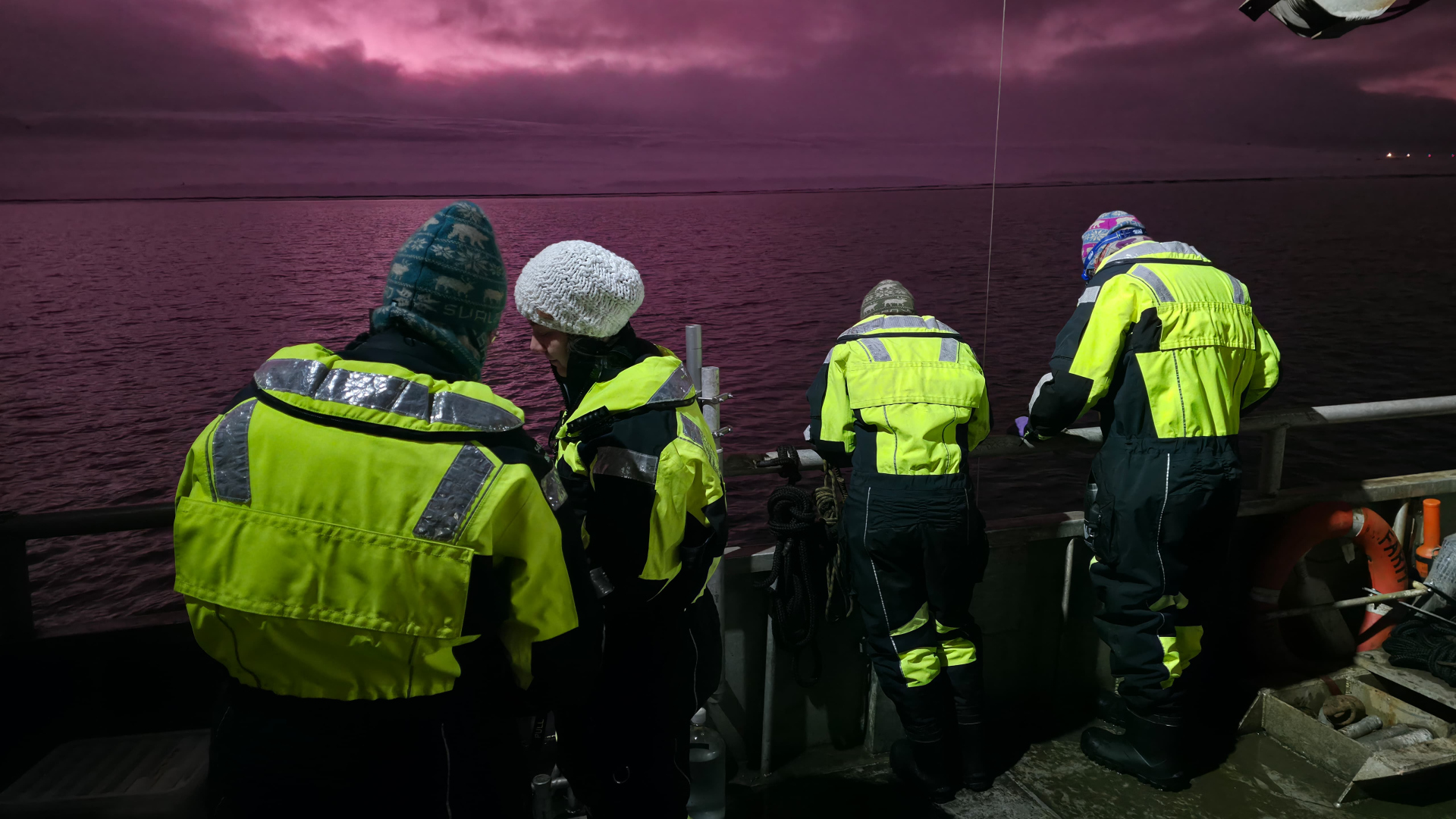
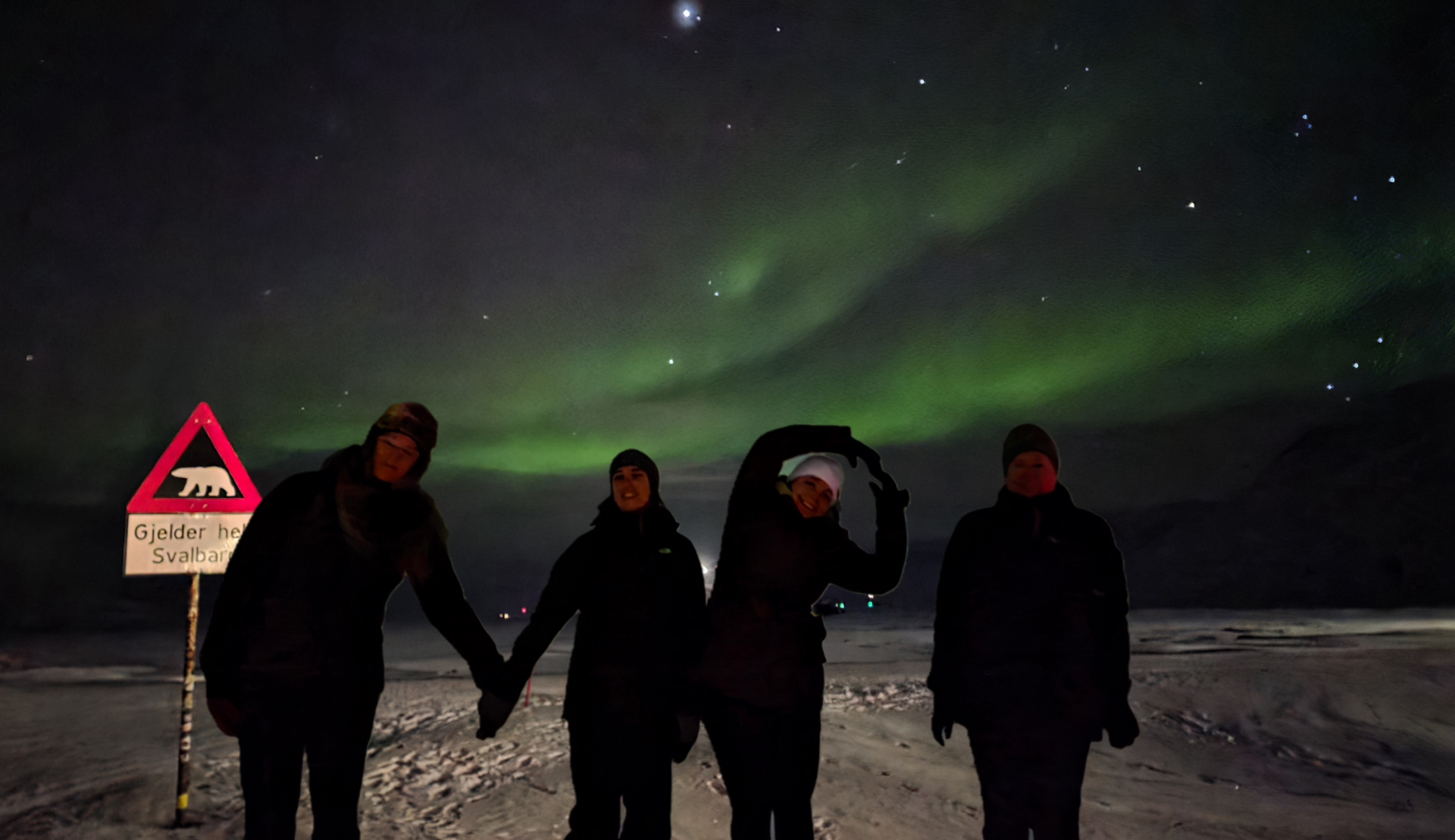
It is currently polar night on Spitsbergen. The only light comes from the moon – or from northern lights. These lights, also known as aurora borealis, occur when electrically charged particles from the sun collide with gas particles in the Earth's atmosphere. Depending on the type of gas, the sky glows green, purple or red. Some auroras are very calm, while others resemble fantastic fireworks. Our researchers were lucky enough to marvel at the northern lights several times during the first few days of the expedition. “The colourful lights keep shining. The whole sky is full of them: in front of us, above us, behind us – no matter where you look. It's really very impressive,” reports Knittel. “One day the lights danced across the sky, the next day they were rather calm. Sometimes in many colours and then again in a single color, turning the entire sky pink.”
Bacteria changing with the seasons
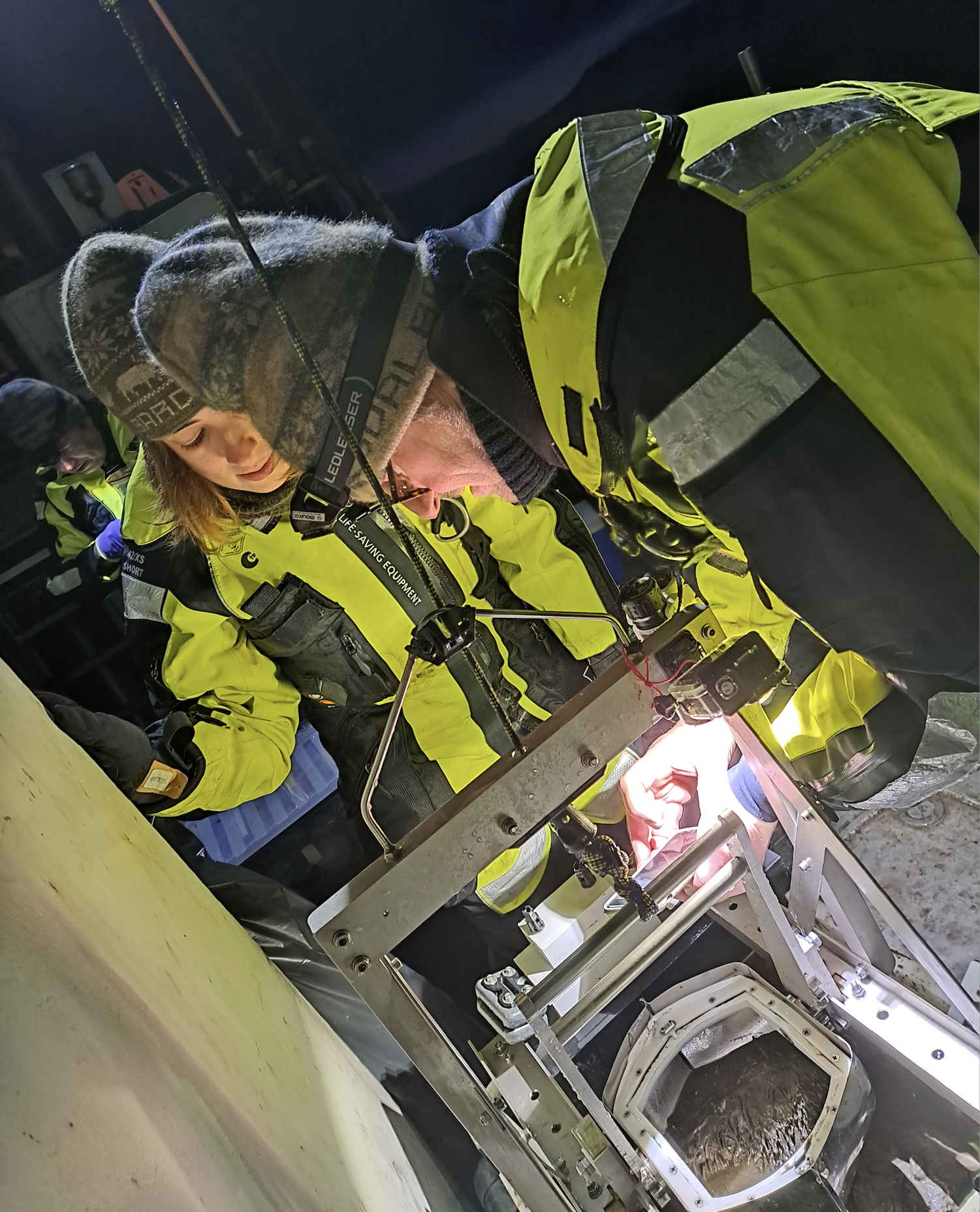
As great as the admiration for this natural phenomenon is, the focus of the trip is on research. Knittel and her team take samples from the seabed and seawater to study the bacteria living there. Among other things, they investigate the effects of the seasons and the associated changes in nutrient and particle input into the seabed. For years, researchers at our institute have been observing significant seasonal changes in bacteria in the water (bacterioplankton) in the German Bight off Heligoland in bacterial communities and their functions. Detecting such seasonal adaptations in bacteria on the seabed is much more difficult. Spitsbergen is located at 78 degrees north and, with three months of polar night in winter and round-the-clock daylight in summer, offers ideal conditions for investigating this question. In addition, an offshoot of the Gulf Stream and ongoing climate change keep the Isfjord ice-free all year round.
Biological filters
And why are we interested in this? Sandy coastal sediments are very important for global biogeochemical cycles. There, organic material originating from algal blooms in the ocean or from rivers is broken down very efficiently by bacteria. Thus, coastal sands act like large biological filters that clean the sea. Through mineralisation, biomass is broken down into nutrients throughout the year, which, together with sunlight, water and carbon dioxide, form the basis for photosynthesis. This closes the biogeochemical cycles and preserves the foundations of life.
Exciting prospects
Knittel and her team are planning a total of five expeditions to Spitsbergen in 2026. This will enable them to collect samples and data from all seasons.
We will continue to report on how the polar researchers are getting on!
More information


Contact
Project leader
Department of Molecular Ecology
MPI for Marine Microbiology
Celsiusstr. 1
D-28359 Bremen
Germany
|
Room: |
2222 |
|
Phone: |

Head of Press & Communications
MPI for Marine Microbiology
Celsiusstr. 1
D-28359 Bremen
Germany
|
Room: |
1345 |
|
Phone: |
