- Departments
- Department of Molecular Ecology
- Molecular Ecology
- People
- Garance Cosima Gauthier
Garance Cosima Gauthier
PhD Student
Department of Molecular Ecology
MPI for Marine Microbiology
Celsiusstr. 1
D-28359 Bremen
Germany
|
Room: |
2225 |
|
Phone: |

About Me
I completed my Bachelor in technological sciences focused on biology in the Frontiers of Life program at the Université Paris Cite and the Centre de Recherche Interdisciplinaire (CRI, now LPI) in Paris, France in 2023. There I discovered an interest in microbiology thanks to interesting internships and research projects: For example, I assisted Dr. Maira Goytia in optimizing methods to observe theformation of biofilms by different Neisseria strains such as developing a microfluidics setup.
I developed my knowledge in microbiology at the Muséum National d’Histoire Naturelle in Paris, France through the BEE-MES Master (Microbiology, Environment and Health) from which I graduated in 2025. There I joined the MPI for the first time for a short internship after which I returned for my Master thesis, under the supervision of Dr. Katrin Knittel, during which I used metagenomics and metatranscriptomics to study the path of organic matter degradation in marine polar sandy sediments. This project lead into my PhD project which I will develop in the following paragraphs.
Particles on the Move: How Arctic Microbes Connect the Seafloor and the Ocean
Context
At continental shelves, the most shallow zones of the ocean bordering the coasts, the seafloor acts like a giant biological filter. As particulate organic matter sinks from the surface, it gets trapped in sandy sediments. A dense and diverse community of microbes living within the sand can degrade this organic matter. But the story doesn't end there: microbes living in the sand can be washed back into the open water, while microbes in the water can stick to particles and sink down. My research tracks this exchange, known as benthic-pelagic coupling, to understand how it controls the flow of carbon in the Arctic.
Why It Matters
Microbes are the engines of the ocean's carbon cycle. By understanding how they move between the seafloor and the water column, and how they respond to seasonal changes, we can better predict how marine ecosystems store or release carbon.
Why do we go to the Arctic?
The Arctic is characterized by extreme seasonality: During winter there are several months of darkness (polar night) while in summer there are several months of 24h daylight (polar day). These strong changes in light results in an only seasonal input of organic matter into the ocean and makes the Arctic an excellent habitat to study how carbon flow in the ocean.
Furthermore, Arctic ecosystems are of high interest due to the pronounced global warming, causing accelerated melting of glaciers and thawing of permafrost soils. These changes release freshwater, nutrients, organic material, and microbes from land into the ocean. Detecting and understanding changes in microbial community composition and activity is therefore crucial for predicting how oceans respond to the warming and how these responses may impact the global climate.
What I Study
I am investigating microbial communities that live in the water column compared to those living in the seafloor sediment of Isfjorden, Svalbard, with a focus on particle-attached microbes.
- Filter Effect: Sand traps organic matter, creating a unique environment for microbes to break it down.
- Exchange: Some microbes live attached to sand grains, while others thrive in the interstitial water (= porewater) between the grains. I study how the ecology and genomic capabilities of porewater sediment microbes compare to the microbes attached to particles in the open water.
- Seasonal Changes: We sample across extreme seasons, from the polar night (24-hour darkness) to the midnight sun, to see how light and food availability change microbial behaviour.
Hypothesis
Particle-attached microbes in the sediment and in the water column have the same genetic "toolkit" (metabolic potential), but they use it differently. Because the sediment is rich in food and crowded with cells, these microbes express different genes compared to their counterparts in the open water.
How I Work
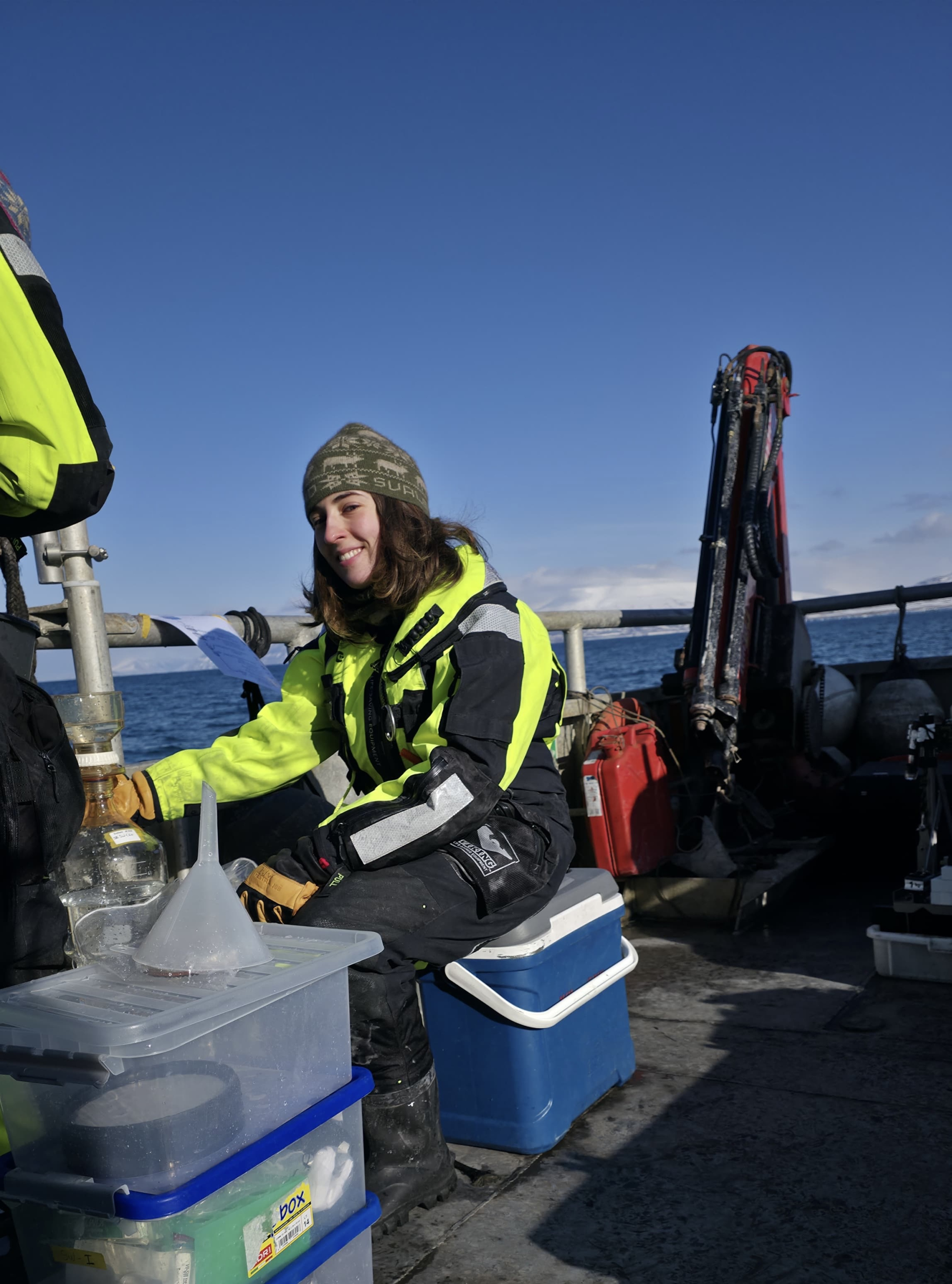
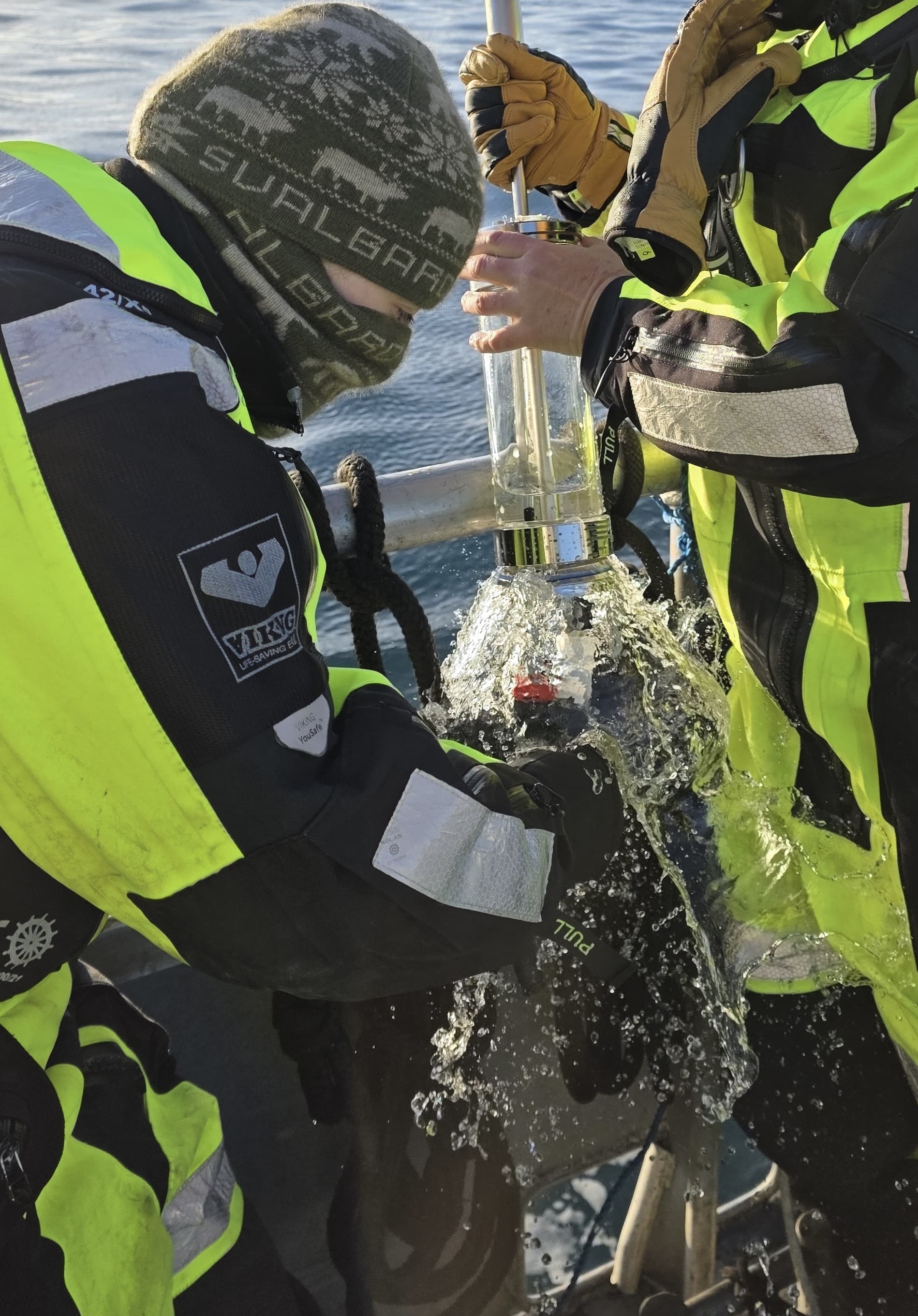
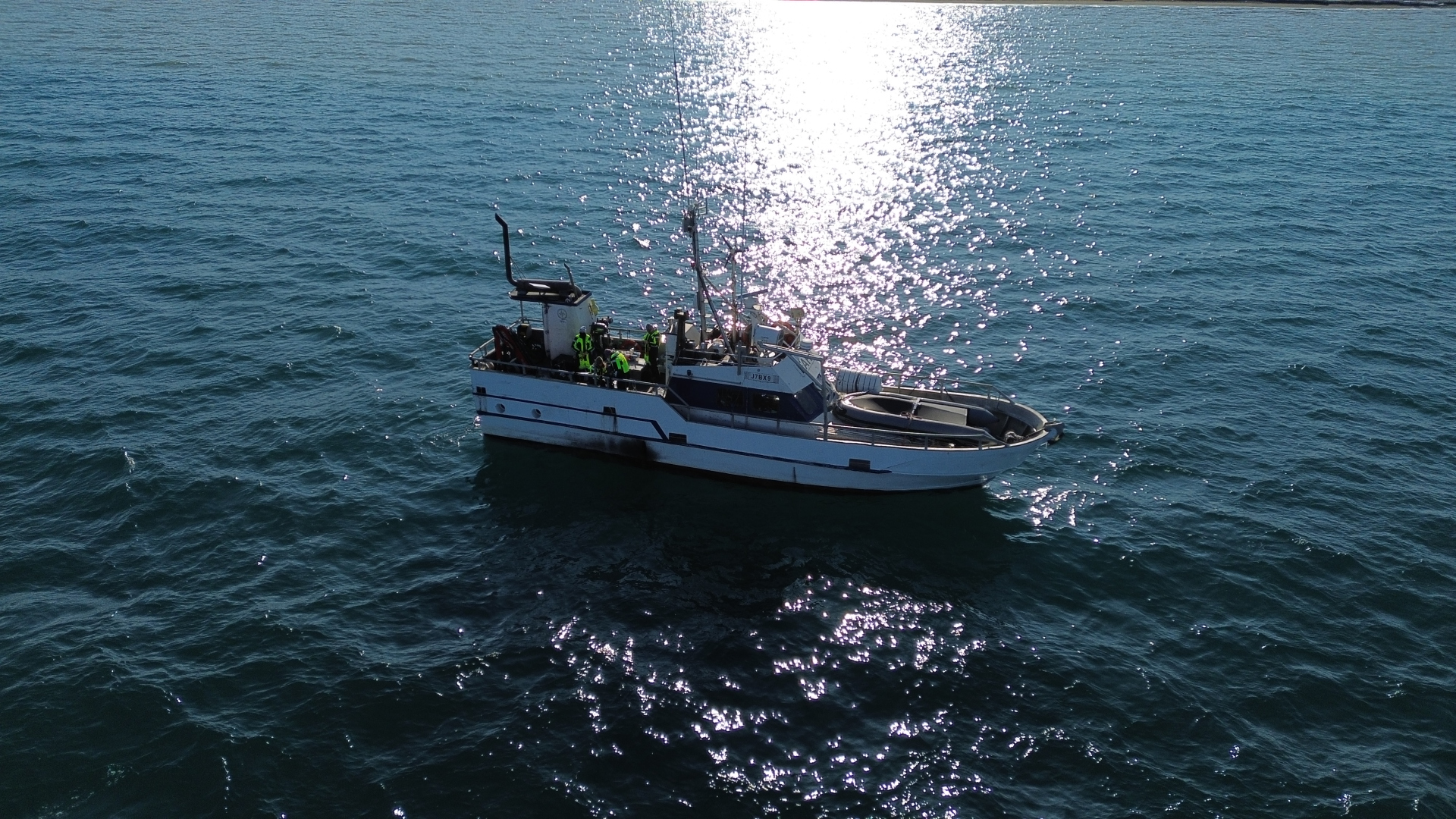
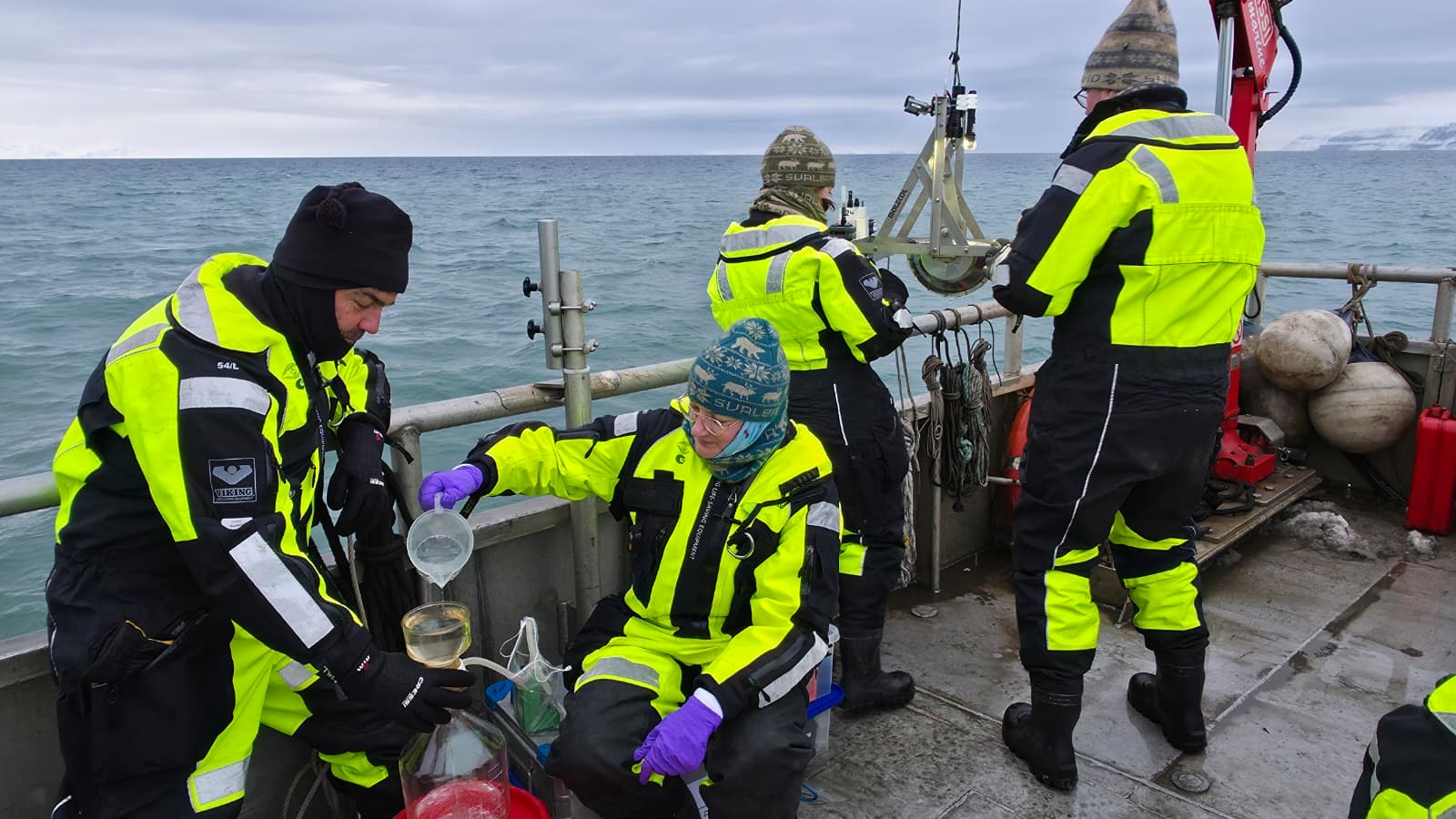
- Fieldwork: I collect water and sediment samples from the Arctic fjord during seasonal expeditions.
- Sample processing: I separate the microbes based on where they live (attached to particles vs. free-floating).
- Lab analysis and bioinformatics: I use molecular methods and bioinformatic tools to identify the members of the microbial community, for example DNA and RNA sequencing is used to study microbial gene repertoire and gene expression (meta -omics approach). I also use microscopy-based techniques (FISH) to visualize these communities directly.
Many of the samples are also analyzed by collaborators in the institute.
- Oxygen consumptions are measured by Dr. Dirk de Beer.
- During two of the trips, substrate degradation rates in the sediment fractions were monitored by Dr. Carol Arnosti.
- The geochemical composition of the sediments (grain size, pigments, dissolved inorganic carbon…) is analyzed by collaborators in the Biogeochemistry department such as Dr. Peter Stief.
Finally I also investigate sulfate reduction rates in the sediments fractions in collaboration with Dr. Tim Ferdelman.