- Press Office
- Press releases
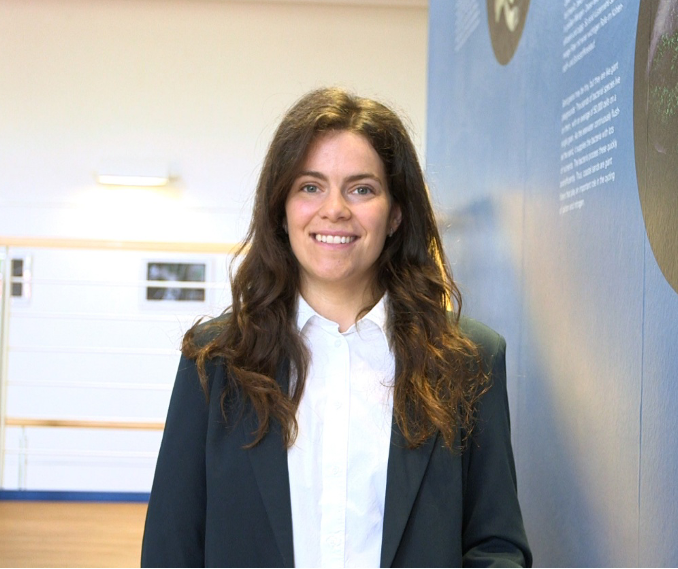
- ERC Starting Grant for Dr. Alicia L. Bruzos
ERC Starting Grant for Dr. Alicia L. Bruzos
A highly competitive European grant
The ERC Starting Grant is one of Europe’s most competitive funding schemes for researchers at the beginning of their independent careers. A total of 4,807 proposals were submitted to the 2026 call, and only 9% are being funded this year. Bruzos will receive €2,006,562 over five years for her project Bivalve2bivalve to study the “Ecology and evolution of horizontal transmissible cancers in cockles”.
Cancer that moves from one animal to another
Cancer is not contagious in humans: human cancers arise from a person’s own cells and do not normally pass from one individual to another. In a small number of animal species, however, evolution has produced an extraordinary exception. Living cancer cells themselves can move between animals, enter a new host and continue multiplying there. These transmissible cancers are known in dogs, Tasmanian devils and several marine bivalves, including mussels, clams and cockles.
Bruzos studies these unusual cancers in cockles, where cancer cells circulate in the haemolymph (the blood of these animals) and can be released into seawater. The cancer can therefore outlive the animal in which it originally arose and persist by spreading through a population.
“Cancer normally dies with the organism in which it originated. Transmissible cancers break that rule,” says Bruzos. “The cancer cells can survive beyond their founder animal, travel through the environment and colonise another animal. They start to behave almost like parasites.”
What makes one transmissible cancer successful?
Her project Bivalve2bivalve will ask a simple question: why do some transmissible cancers spread successfully, while others remain limited to certain places or host species? The project will focus on two closely related European cockles, the common cockle Cerastoderma edule and the lagoon cockle Cerastoderma glaucum.
The team will examine three possible “gatekeepers” of transmission. First, they will ask whether the cockle immune system can recognise and eliminate foreign cancer cells, and how successful cancer lineages may escape this defence. Second, they will investigate whether the microorganisms naturally associated with cockles make an animal more or less permissive to cancer. Third, they will test how environmental conditions such as temperature and salinity influence cancer cells that must survive in seawater on their way from one host to another.
To answer these questions, the group will combine field sampling along European coasts with microscopy, laboratory experiments, sequencing analyses and environmental measurements. Rather than studying each factor in isolation, the researchers will integrate them to identify the ecological conditions that allow a transmissible cancer to persist and spread.
“We want to understand the ecological niche that makes cancer transmission possible,” Bruzos explains. “Why does the immune system reject foreign cells in some situations but allow these cancer cells to survive? Can the microbiome help or hinder them? And what happens to a living cancer cell when it has to pass through seawater before reaching its next host?”
Growing a new research group in Bremen
The ERC grant will bring more than €2 million in European research funding to Bremen and allow Bruzos to expand the Marine Transmissible Cancers Research Group that she established at the Max Planck Institute for Marine Microbiology in September 2025. The funding will support four additional team members and cover the fieldwork, laboratory experiments and large-scale generation of genomic, transcriptomic and microbiome sequencing data required for the project.
At 33, Bruzos is already leading an independent laboratory, four years after completing her PhD in Spain. Before moving to Bremen, she carried out postdoctoral research at the Francis Crick Institute and University College London in the United Kingdom and at Université de Caen Normandie in France. Her previous work contributed to the discovery of a transmissible cancer that crossed between two clam species but also to the genomics of human cancers while she was part of the International Cancer Genome Consortium (ICGC) and The Cancer Genome Atlas (TCGA).
From Minerva Fast Track to ERC
Bruzos came to the Max Planck Society through the Minerva Fast Track Programme. This programme supports outstanding early-career female scientists in establishing their first independent research groups and is part of the Max Planck Society’s strategy to increase the proportion of women in scientific leadership positions. It provides up to four years of funding, independence and career development at a stage when permanent leadership opportunities are still rare.
For Bruzos, Minerva Fast Track provided the foundation to open her laboratory in Bremen and develop preliminary data that developed into this ERC project. The new grant now allows the group to move to a substantially larger scale only one year after its establishment.
“The Minerva Fast Track Programme is designed to identify exceptional women scientists early and give them the independence and resources to develop their own research vision while being mentored and supported,” says Nicole Dubilier, Director of the Department of Symbiosis at the Max Planck Institute for Marine Microbiology and Bruzos’ mentor. “Alicia’s ERC Starting Grant, only one year after establishing her group in Bremen, is an example of what this support can enable. Her project also fits beautifully with our institute’s strengths in symbiosis, microbiology and marine research.”
“The Max Planck environment has been decisive for me,” says Bruzos. “Nicole supported me in taking the first step towards independence through Minerva Fast Track and has continued to mentor me as I built the group. I am also very grateful to Rudolf Amann and Jean-Baptiste Raina, who, together with Nicole, invested time in helping me prepare for the ERC application and interview during this last year. Beyond the scientific infrastructure, I have found an supportive environment.”
A natural experiment in cancer evolution
For Bruzos, the broader value of the project lies in what these unusual marine cancers can reveal about fundamental biological rules. Most cancers cannot survive outside the individual in which they arise, and even transmissible cancers usually remain confined to a particular host species. Cockles therefore provide a natural experiment for studying immune escape, metastasis, species barriers and disease ecology in real ecosystems. “These cancer lineages have been evolving in the sea for many generations,” says Bruzos. “Studying why some survive and spread while others fail can teach us about the barriers that normally keep cancer confined to one body. That is what makes this system so fascinating.”
About the ERC Starting Grant
The European Research Council supports investigator-driven frontier research across all scientific disciplines. ERC Starting Grants are designed for excellent researchers who are starting their own independent research programme. They provide up to five years of funding to pursue ambitious, high-risk and high-gain research ideas and to build research teams in Europe.
Gesamte Seitenbreite
Please direct your queries to:
Scientist
Minerva Fast Track & ERC Research Group for Marine Transmissible Cancers
MPI for Marine Microbiology
Celsiusstr. 1
D-28359 Bremen
Germany
|
Room: |
2251 |
|
Phone: |
