- Press Office
- Press releases
- A symbiotic marketplace: Stability through flexibility
A symbiotic marketplace: Stability through flexibility
A typical scene at a local farmer’s market: Various stalls offer fruit, vegetables and much more. Every customer has their favorite stalls, though these may change occasionally.
Some symbiotic relationships seem to work just like that, a study by researchers from the Max Planck Institute for Marine Microbiology now reveals in Science Advances. The team around Nicole Dubilier, Harald Gruber-Vodicka and first author Anna Mankowski investigated the “shopping habits” of tiny marine worms living in close association with bacteria. This association is so close that the worms are no longer viable on their own: they have neither a mouth, nor a gut or other excretory organs. To feed and dispose of their waste, they host tiny tenants: different bacteria live under the skin of these thin, short worms and serve as their providers and waste managers. To stay with the metaphor, the bacteria are the market stalls where the worms get what they need to survive.
Relatives shop differently
For their survival, the worms are thus completely dependent on their bacterial tenants. The partners make a perfect match. The bacterial communities of worms of the same species are very similar. The worm always visits the same bacterial market stalls, as there it gets exactly what it needs.
With such a tight relationship one would expect that it is very stable – following the motto: Never change a running team. “However, we found the exact opposite!” Mankowski reports. The relationship is indeed stable within one species. Even when living in distant ocean regions, worms of the same species harbor the same or very similar bacterial communities.
However, this similarity quickly vanishes when comparing different hosts. Even closely related worm species often host very different bacterial communities. The relatives rather shop somewhere else. A different market, be it in another part of town or totally different region, will still provide the customer with staple food, fruits and vegetables. But local choices will lead to a different basket. Alike, local host species solve local needs with a specific and locally adaptive community of symbionts. And similar to our shopping on markets, the study also shows that the partners in the symbiosis are not particularly true to each other in time. “The worms regularly take up new symbionts, occasionally they also drop some,” says Mankowski. They like to try out new market stalls every now and then, and adjust to the local supply.
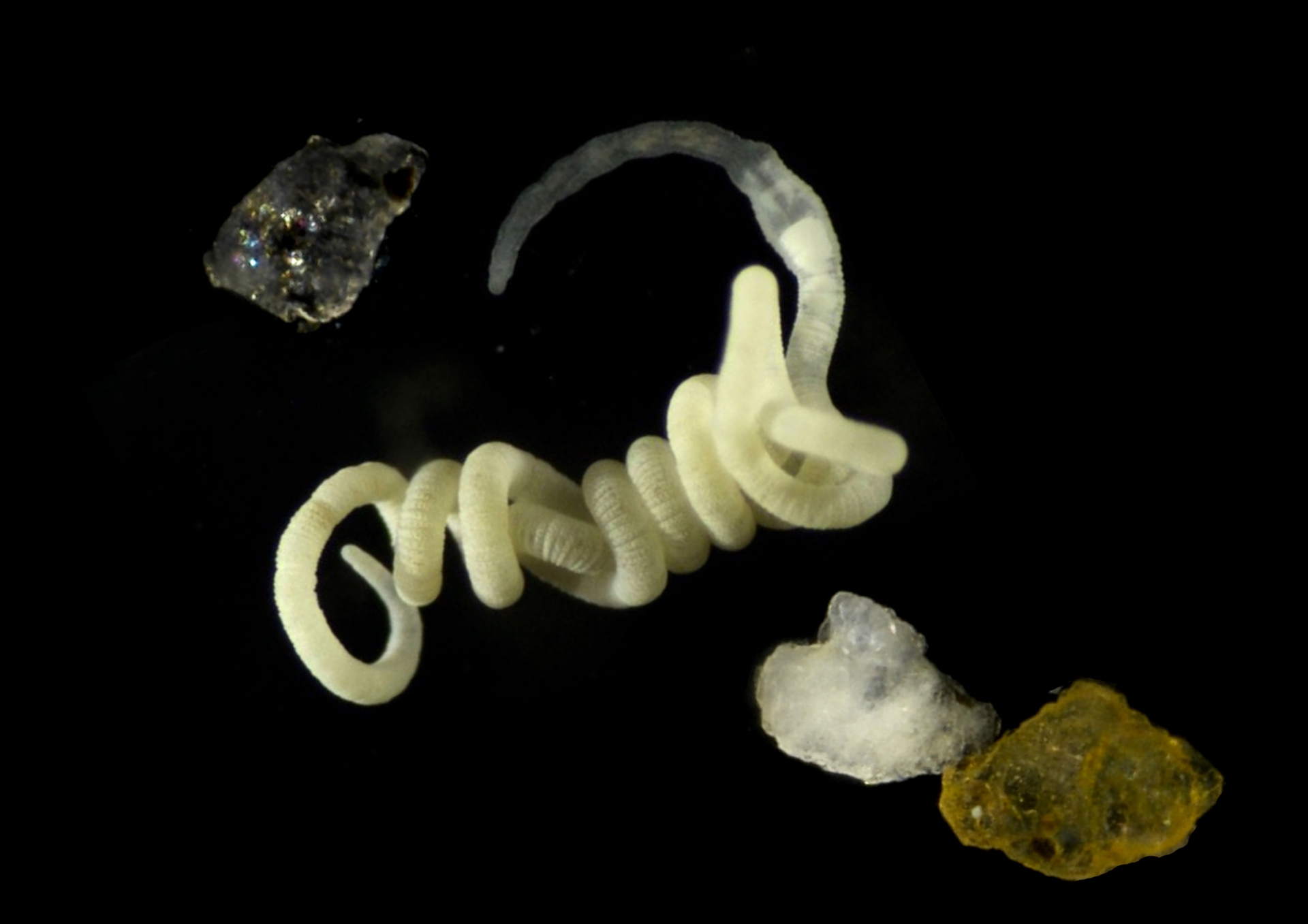
New partners – new sources of food and energy
“That really surprised us,” says Nicole Dubilier, who has been studying these partnerships for a long time. “If you are so dependent on a partner, it seems risky not to be completely loyal to them.” Then why do the worms act like that? Perhaps by regularly trying out new “bacterial stalls”, they can expand their diet. Each bacterial partner has different abilities. Thus, by taking in new bacteria, the worm can tap into new sources of food and energy. “This can be very useful, especially in habitats where nutrients are sometimes scarce,” says Dubilier.
Flexibility as an evolutionary recipe for success
For this study, the researchers at the Max Planck Institute for Marine Microbiology analyzed samples collected during three decades of expedition work – a total of nearly 250 worms representing 63 species from 17 different locations. Never before has such a comprehensive survey been conducted. “It really only became possible with the technical innovations of the last few years,” Gruber-Vodicka, project leader at the Max Planck Institute in Bremen and now with his own lab at Kiel University, recalls. “In the first and seminal metagenomics approach with gutless oligochaetes, thousands of worms were necessary for one analysis, which really limits comparative work. Now we can work with single individuals of animals smaller than a pinhead.”
Their conclusion is clear: While the worms are loyal partners to the bacteria in the short term, they are always open to new possibilities in the long run. Their success proves them right: Despite their seemingly limited lifestyle, these communities have managed to colonize all the world’s oceans and a wide variety of habitats.
Original publication
Anna Mankowski, Manuel Kleiner, Christer Erséus, Nikolaus Leisch, Yui Sato, Jean-Marie Volland, Bruno Huettel, Cecilia Wentrup, Tanja Woyke, Juliane Wippler, Nicole Dubilier, Harald R. Gruber-Vodicka (2026): Stability in flexibility: Shifting alliances stabilize the symbioses of marine animals over 150 million years. Science Advances Vol. 12 No. 40.
DOI: 10.1126/sciadv.aed14
Contact
Director
MPI for Marine Microbiology
Celsiusstr. 1
D-28359 Bremen
Germany
|
Room: |
3241 |
|
Phone: |

Head of Press & Communications
MPI for Marine Microbiology
Celsiusstr. 1
D-28359 Bremen
Germany
|
Room: |
1345 |
|
Phone: |
